
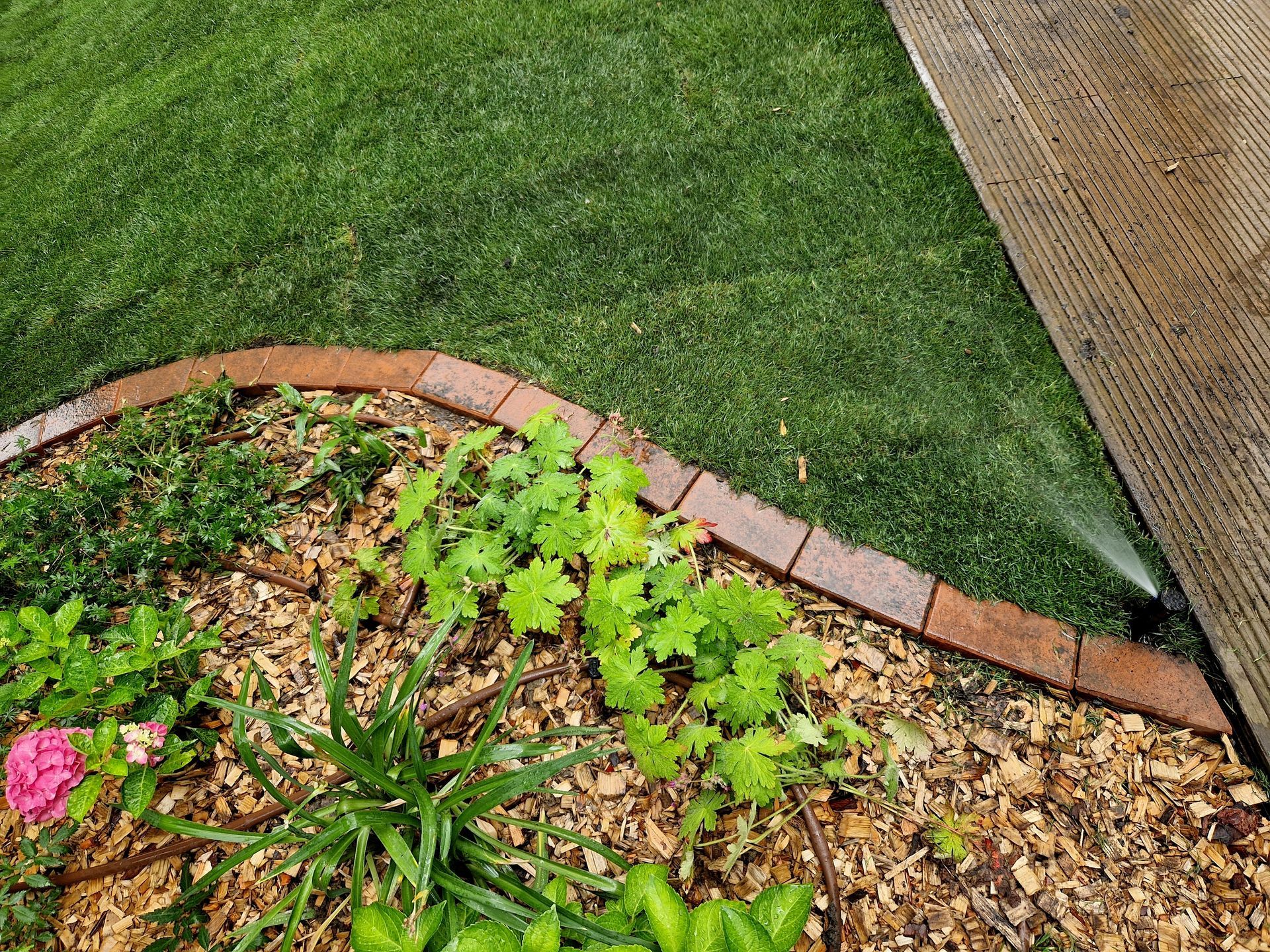
Borders That Define Outdoor Spaces Permanently
Landscape Curbing Installation in Weatherford for properties where lawn edges blend into planting beds without clear separation
B&B Metro Landscape and Irrigation installs landscape curbing that creates visible, raised borders separating lawn areas from planting beds, decorative stone zones, and outdoor features across Weatherford. The curbing forms a continuous barrier that defines edges without shifting or spreading over time. Properties with flower beds that merge into turf or mulch areas that scatter onto grass benefit from the permanent separation curbing provides.
Landscape curbing serves both decorative and functional purposes by preventing grass from creeping into planting beds while containing mulch, stone, and soil within defined areas. The installation eliminates the need for repeated edge trimming and reduces maintenance around landscape features. Curbing also directs water flow during irrigation and rain events, preventing erosion along bed edges.
Schedule a property evaluation to identify where curbing will improve landscape definition and reduce ongoing maintenance.
What Proper Curbing Installation Requires
The installation process begins with layout planning that follows the natural lines of existing landscape beds, pathways, and hardscape features. Depth and width specifications vary based on soil conditions and the height difference between lawn and bed areas. The curbing material is placed in a prepared trench and allowed to cure before backfilling, which prevents shifting and maintains the defined edge through seasonal ground movement.
Once curbing is installed, you'll notice that mowing becomes more efficient because the mower runs along the curb edge without needing string trimming afterward. Mulch and decorative stone stay contained within planting beds instead of scattering onto the lawn during storms or watering. The clean separation makes it easier to apply fertilizers and herbicides to specific areas without overlap or waste.
Curbing installations can follow curves, straight lines, or custom shapes depending on property layout and design preferences. Color options are available to complement existing hardscape or contrast with landscape materials. The curbing remains stable through freeze-thaw cycles and does not degrade from UV exposure or ground moisture.
What Property Owners Usually Ask
Questions about landscape curbing often focus on durability, layout options, and maintenance requirements once the installation is complete.
B&B Metro Landscape and Irrigation customizes curbing layouts to match each property's specific design and functional needs. Request a detailed estimate to review layout options and determine how curbing will improve your landscape organization.
How is landscape curbing installed?
The process involves excavating a narrow trench along the planned border, preparing the base for proper drainage, and placing the curbing material in a continuous pour that forms a solid, raised edge. The curbing is shaped to follow the desired layout and allowed to cure before backfilling.
What prevents the curbing from cracking over time?
Proper base preparation and controlled placement reduce stress points that lead to cracking. In Weatherford, where clay soils expand and contract with moisture changes, the trench depth and width are adjusted to accommodate ground movement without compromising the curbing structure.
How tall should curbing be for effective separation?
Curbing typically rises three to six inches above ground level, which is enough to contain mulch and stone while allowing mower wheels to ride along the edge. The height is adjusted based on the depth of planting beds and the type of material being contained.
Can curbing be added around existing landscape beds?
Yes, curbing can be installed along established bed lines without disturbing existing plants. The trench is dug close to the current edge, and care is taken to avoid root zones of shrubs and perennials during excavation.
Does landscape curbing require maintenance after installation?
The curbing itself requires no ongoing maintenance, though occasional cleaning with a hose removes soil and debris buildup. The durable material resists weathering and does not need sealing or repainting to maintain its appearance.